Gestionale Bar
Back-office software for bars and small restaurants. Real food cost, smart reordering, expiry by batch and a cash close that adds up.
- What
- Web app for tablets
- When
- September 2026
- Stack
- React, Vite, Express, SQLite, Testing
The problem
A bar owner knows what they sold today. What they usually don’t know is what each espresso actually costs them, when the milk will run out, how much stock went in the bin last month, or why the cash drawer is €12 short again.
A till can’t answer any of that. It records sales, and stops there. This is not a cash register: it answers the questions a till can’t.
What I built
A local web app for the devices already in the room: the tablet on the counter, the waiter’s phone, a screen in the kitchen. Data lives in SQLite on one machine on the venue’s network; no external service, no subscription.
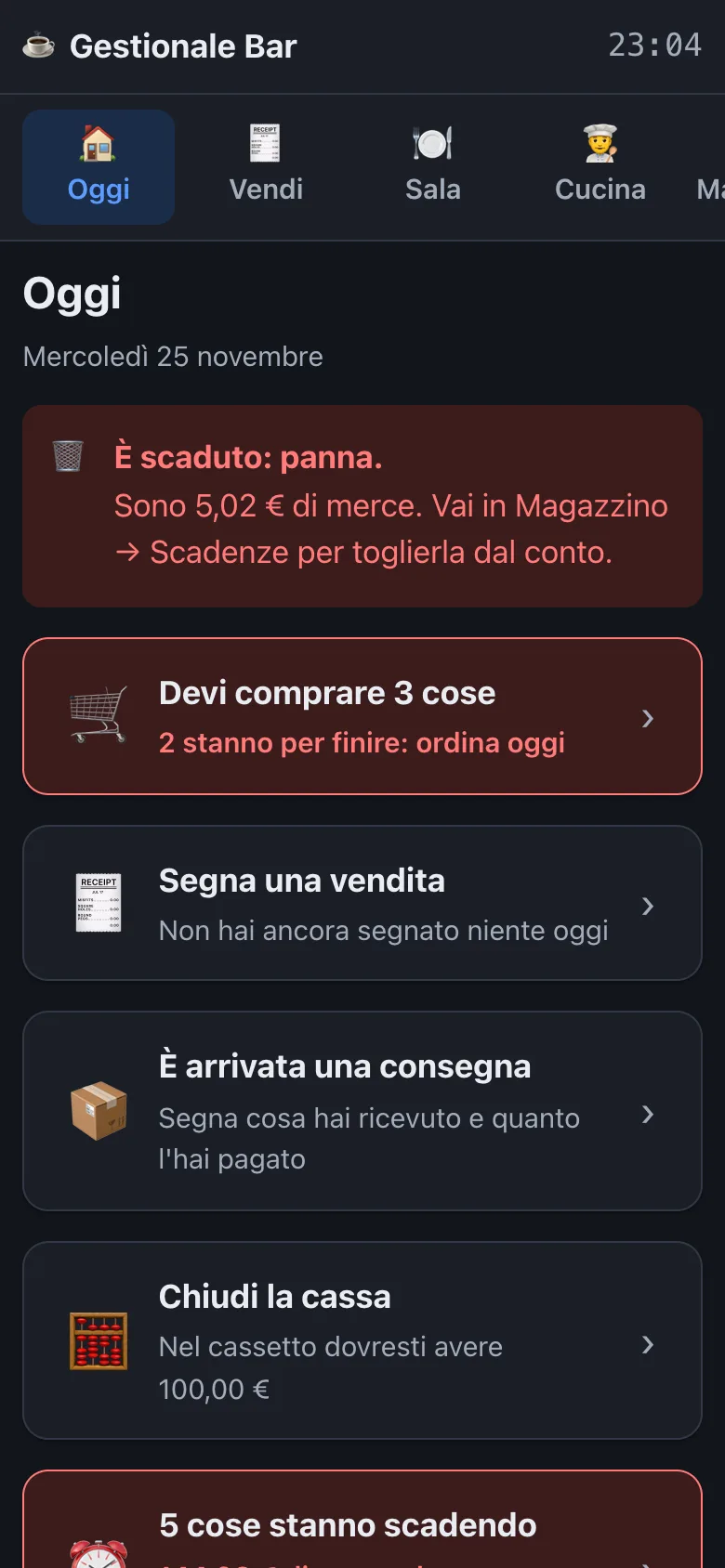
- Today: three big buttons (buy what’s missing, record a sale, a delivery arrived) and alerts for whatever has run out
- Sell: dishes as large keys grouped by category, like a till, with separate counter and table price lists
- Floor: table orders that stay open while people add to them, a bill discount spread across the lines in proportion, and a closed bill that can be reopened
- Kitchen: a display with big order cards, readable from two metres with busy hands, oldest first, turning yellow after ten minutes and red after twenty; coffees never show up there, because each dish knows who prepares it
- Stock: deliveries, a shopping list built from real consumption, expiry alerts and waste tracked at its cost
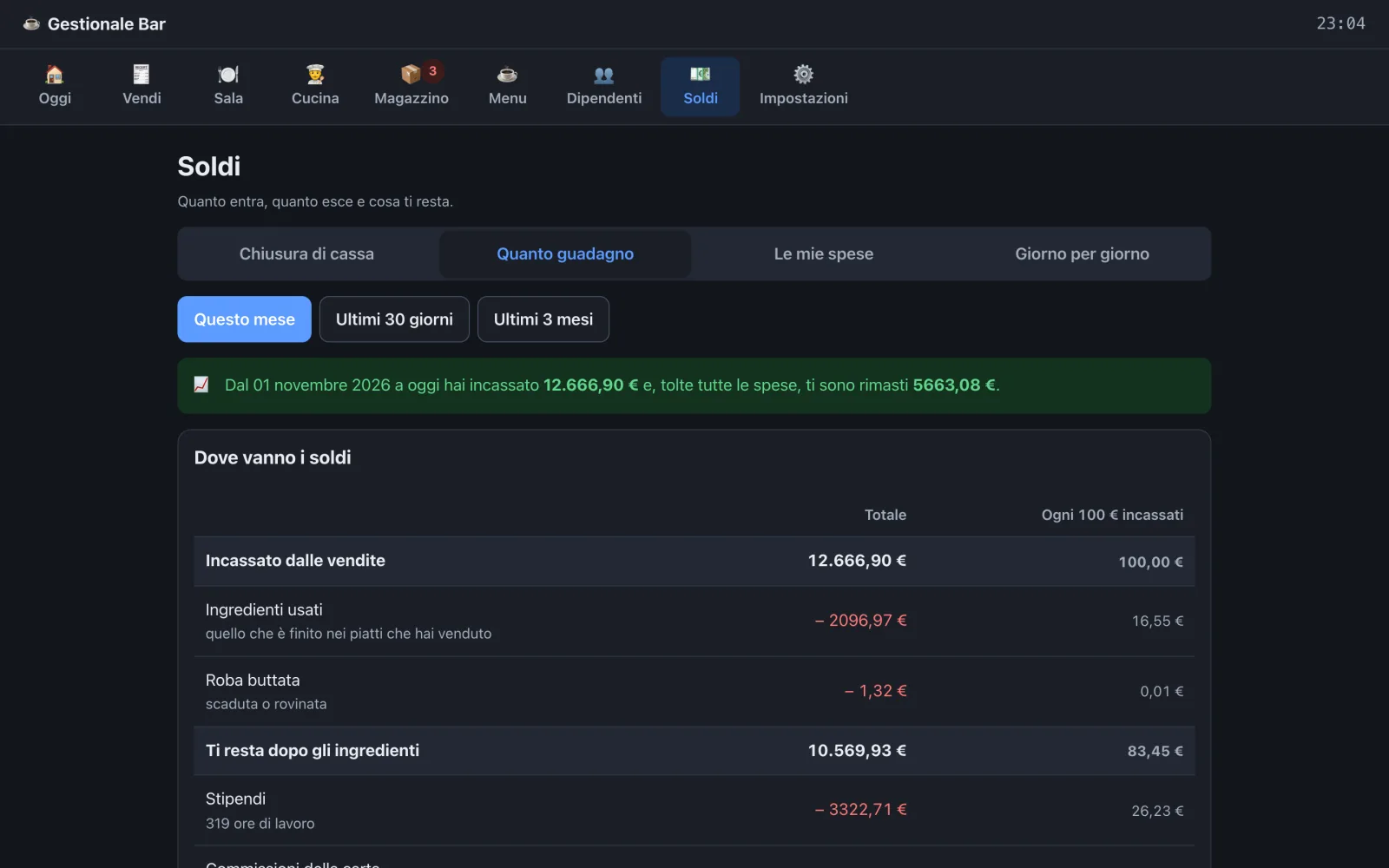
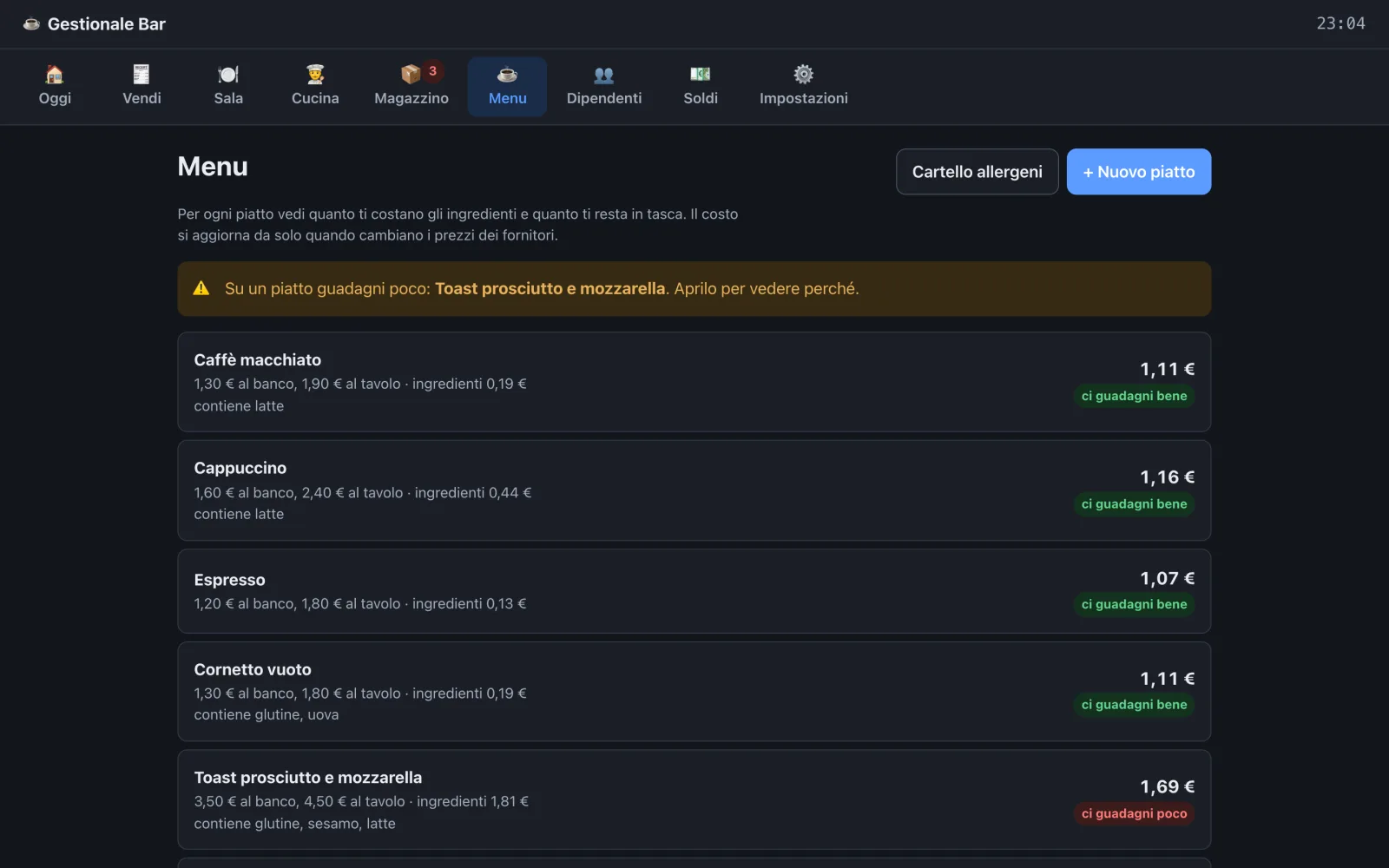
- Menu, staff and money: recipe costing and a printable allergen sheet, hours worked against what has been paid, cash close and a plain-language profit and loss
Each device picks its role once (till, floor or kitchen) and shows only those screens. Backed by 94 integration tests on the API.
Notes on the model
Everything hangs off a single stock movement ledger: every delivery, sale, waste and correction writes a row with the quantity and the cost at that moment. That one decision makes the rest fall out:
- Food cost updates itself. Coffee goes up 10% and the espresso margin changes without anyone touching it, via a weighted average cost, so buying 10 kg at €24 when you hold 10 kg at €20 gives €22/kg, not €24.
- History stays correct. Changing a recipe today doesn’t rewrite the cost of yesterday’s sales.
- Reorder looks at real consumption, crossed with the supplier’s delivery days. The reorder point says when to act; the target stock says how far to fill. Conflating the two puts you back in alarm the next morning.
- Expiry lives on the batch, not the ingredient. Milk bought Monday and milk bought Wednesday don’t expire together, so each delivery line creates a batch and consumption is FEFO, first expired, first out.
Notes on the interface
The person using it is behind a counter. So: no jargon on screen (“how much am I making” where an accountant would write “operating margin”), percentages become euros (“of every €100 taken, €18.70 goes on ingredients”), quantities round up to amounts you can order, nothing is smaller than 48 px, and confirmations spell out what will happen, in place of “OK / Cancel”.
Voiding a sale doesn’t delete it: the money comes back, the goods return to the batches they came from, and the sale stays on record as voided with a time and a reason, because deleting it would make it impossible to work out, days later, what happened.
Table orders take stock when they’re taken, not when they’re paid. If it waited for the bill, two tables could order the last toast. The payment method stays empty until the bill is paid, so open tables never inflate the cash close.
Notes
It is honest about its limits, in the app and in the docs. The device roles
decide what each screen shows. They are not authentication, and the app says
so plainly: three profiles in localStorage are no security. And it is not a fiscal register: in Italy that needs certified
hardware, so it sits beside one.
The repository is private. Happy to demo it on request.